
Energy infrastructure for the production and transmission of green energy between Tunisia and Italy
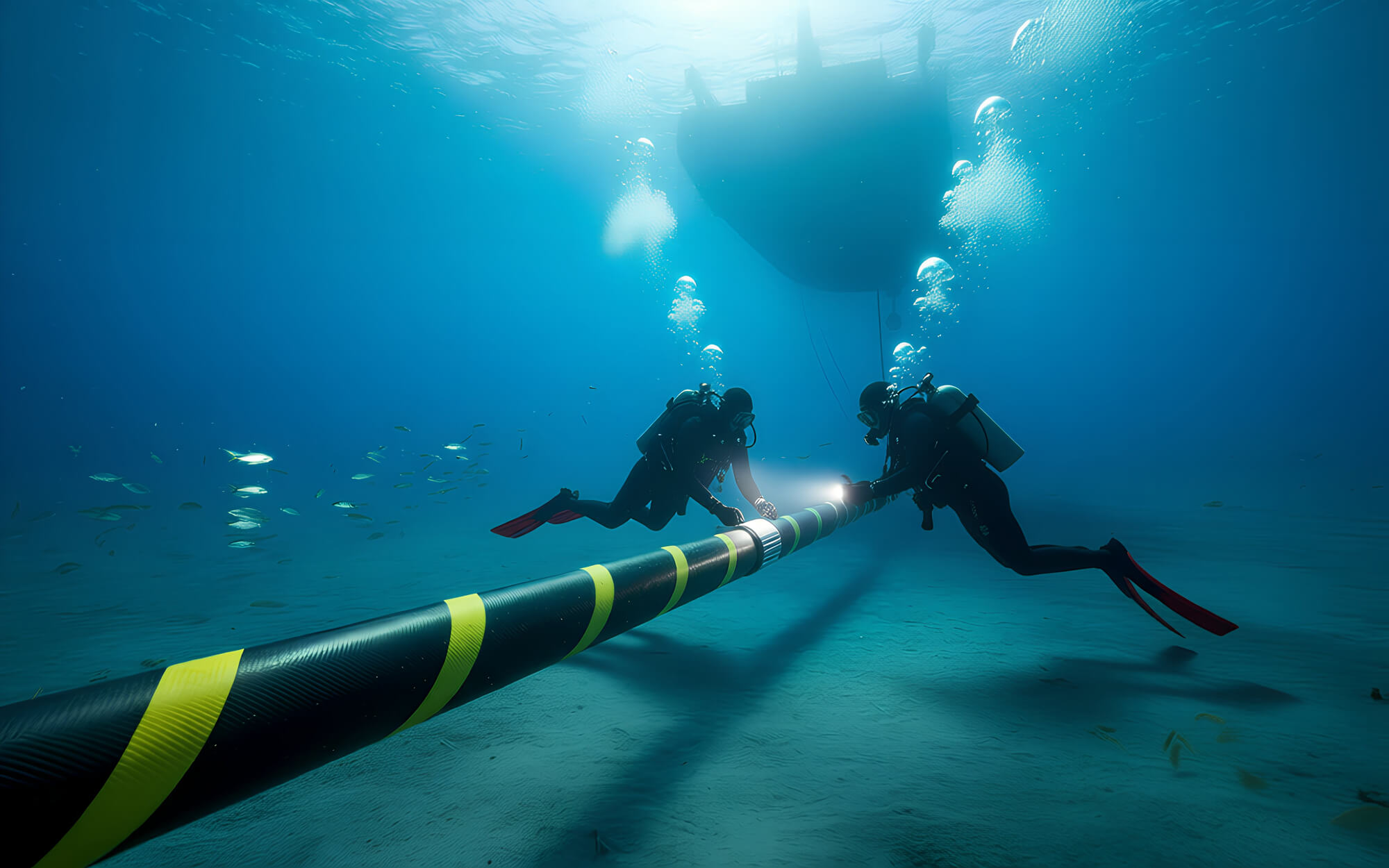
An energy bridge
across the Mediterranean
Tunisia-Italia Link, or TI-Link, is a new infrastructure project for the production and transmission of certified green energy between Tunisia and Italy.
The project includes the development of a renewable energy park with a capacity of at least 5 GW in the Tunisian desert, alongside a power interconnection of up to 2 GW stretching approximately 600 kilometres across the Mediterranean Sea and reaching Tuscany, where it will deliver part of the renewable energy generated.
The project will contribute to both energy security and the decarbonisation of the electricity sector in Italy and across Europe, as well as in Tunisia.
The TI-Link project will be fully financed through private capital, with no impact on end consumers’ electricity bills. Once operational, it will supply the Italian power system with at least 10 TWh of renewable electricity per year — equivalent to the annual consumption of approximately four million households. In addition to supplying Tuscany and the rest of Italy, particularly businesses, the imported energy could also reach major European industrial hubs. Tunisia will benefit from a share of the energy and supporting electrical infrastructure, helping meet the country’s energy needs and contributing to its national decarbonisation targets.
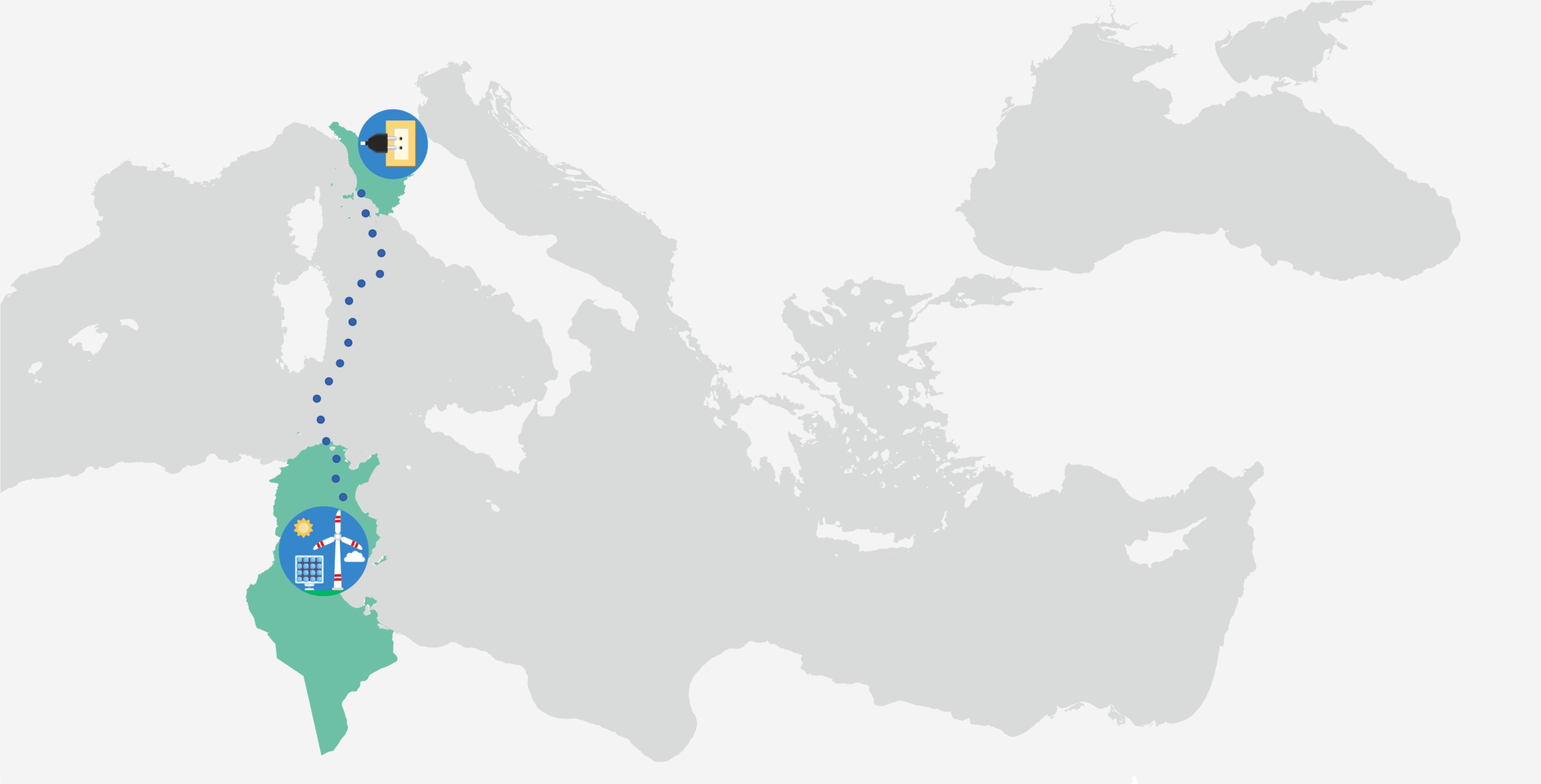
Why TI-Link
TI-Link is the result of strategic cooperation between Tunisia and Italy, aimed at achieving the following objectives:
- enhancing energy security across the Mediterranean;
- supporting the energy transition in Italy, Europe and North Africa to help meet decarbonisation targets;
- unlocking the potential of local natural resources to promote economic and social development in North Africa.
Tunisia benefits from one of the highest and most competitive renewable energy potentials in the Mediterranean, capable of exceeding national electricity demand. TI-Link translates this advantage into a concrete cooperation model: part of the energy produced will be allocated to the Tunisian market, contributing to local and industrial development, Tunisia’s decarbonisation targets and the strengthening of the national grid. The remaining share will be integrated into European electricity markets, creating a more resilient and interconnected energy system.
Thanks to its strategic position in the Mediterranean, TI-Link is a key enabler of deeper energy integration between North Africa and Europe, contributing to the stability of electricity systems, economic competitiveness, long-term price stability and security of supply, while reducing dependence on fossil fuels.
TI-Link’s values
TI-Link is based on an international partnership focused on the principles of sustainable economic development, energy security and mutual growth.
The project is being developed through ongoing dialogue with Italian and Tunisian institutions, in order to align with national priorities and ensure effective integration into both the North African and European energy systems.
In both countries, Zhero has also engaged with local economic stakeholders to involve the industrial value chain and generate tangible benefits for local communities, households and businesses.
Benefits for Italy and Europe
Renewable, certified, competitive and flexible energy
Supply of certified renewable energy at competitive costs, enabled by more favourable production conditions in North Africa.
A more stable, continuous and flexible energy supply, aligned with Italian and European decarbonisation needs, as well as with market dynamics and end-user demand.
An estimated coverage of 3.2% of national energy demand by 2030, making a significant contribution to future electricity needs.
Minimal land use in Italy: TI-Link will require just 0.01% of an area the size of the province of Livorno, whereas producing the same amount of energy in Italy would take up an area larger than the entire province.
A reduction of around €3/MWh in Italian electricity prices, resulting in an increase in national GDP of more than €25 billion over the first 20 years.
Energy transition and sustainability
Reduction of CO₂ emissions in Italy by 3 million tonnes per year.
Support for the energy transition in line with European policies.
Enhanced energy security
Diversification of energy supply sources, strengthening energy security in an evolving geopolitical context.
Greater resilience of the Italian and European electricity grid, supported by a new transmission corridor that enhances the system’s robustness and flexibility.
Private investment, employment and cooperation
Fully private investment, with no impact on consumer electricity bills.
According to recent studies, TI-Link is expected to create around 3,000 jobs during construction and around 300 full-time equivalent (FTE) jobs during operation. The industrial growth driven by TI-Link in Italy is estimated to generate around 21,000 new jobs.
Stronger Europe–North Africa cooperation, in line with the Mattei Plan and EU policies.
Benefits for Tunisia
Social development, industrial growth and employment
Creation of new jobs during both construction and operation, including indirect and induced employment. According to recent studies, around 15,000 jobs are expected during construction and around 800–1,000 during operation.
Development of specialised skills across the country, fostering the growth of a local renewable energy value chain, with expertise spanning different skill sets and regions.
Power system and infrastructure development
Support for Tunisia’s national grid development plans, with Zhero funding the construction of around 500 km of new power lines integrated into the Tunisian grid, as well as infrastructure benefiting local communities. HVDC technology could also be used to export surplus energy during the winter months.
A significant share of the energy made available locally.
An estimated €5 billion of investment in local assets and infrastructure.
Financial strength and support for the local economy
Increase in direct public revenues: improvement in Tunisia’s trade balance, mainly due to:
- the tax contribution of companies operating in Tunisia
- fees for exported energy and for the use of the land
- additional gas savings resulting from reduced reliance on fossil fuels to meet the expected growth in electricity demand, freeing up more gas for export, currently estimated at around 500 million m³ per year.
A contribution of €400–500 million per year to GDP.
€0.8–1.3 billion in local spending during construction and up to €100 million per year during operation.
Further economic benefits from the participation of local companies, local taxes, land-use fees, carbon credits and other revenues.
Energy security and local sustainability
Greater energy security and diversification, with around 3 TWh of electricity per year allocated to the Tunisian market, equivalent to 10–15% of Tunisia’s electricity consumption and 50% of its residential electricity demand.
A stronger role for Tunisia, and for North Africa more broadly, as a strategic energy partner for Europe.
Contribution to Tunisia’s national targets: 50% renewables by 2035.
1.0–1.3 million tonnes of CO₂ avoided each year in Tunisia, equivalent to a 20% reduction in emissions from electricity generation.
International support
TI-Link is an innovative energy infrastructure project of international significance, supported by institutions in Italy, Europe and Tunisia.
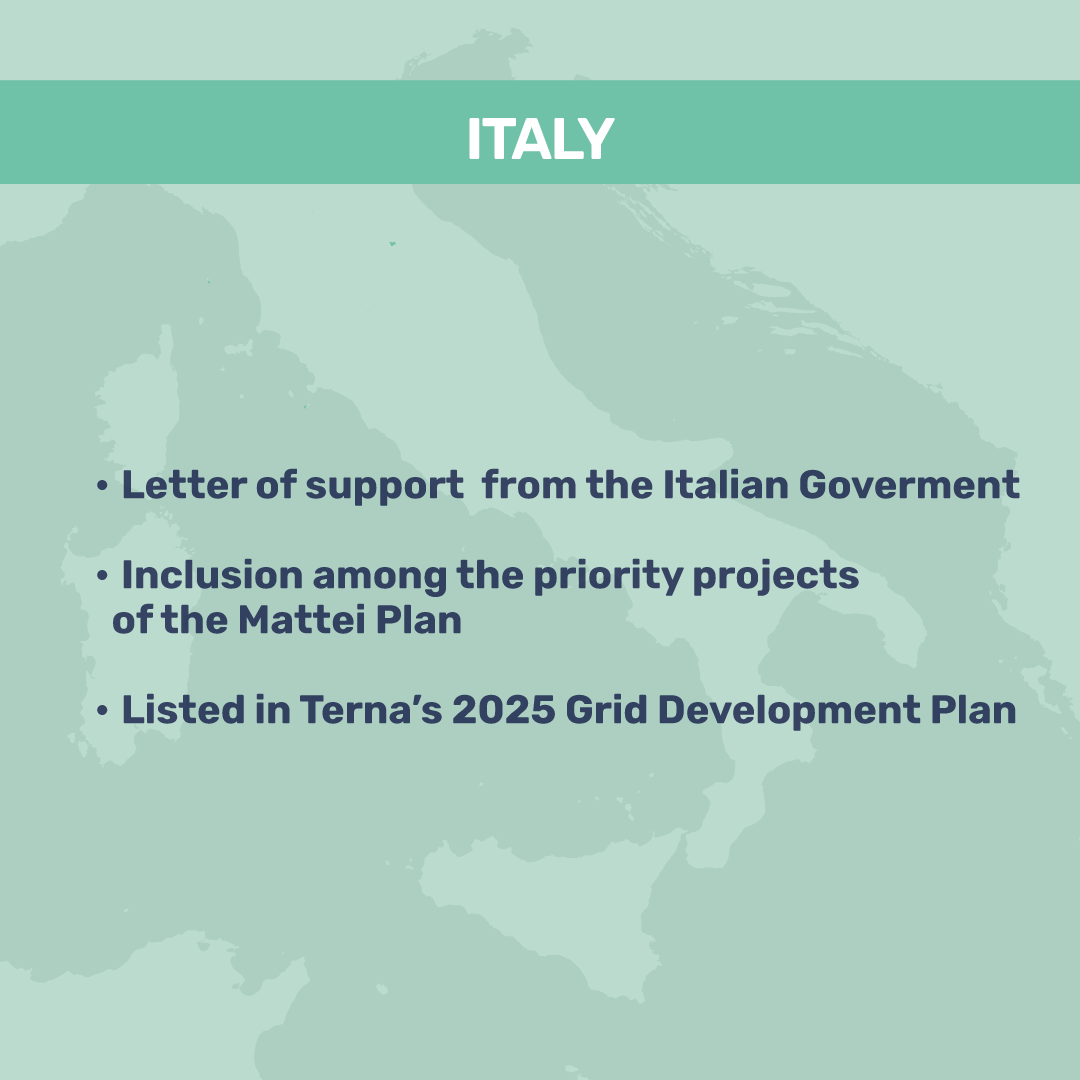
- Lettera di supporto del Governo Italiano
- Inserimento tra i progetti prioritari del Piano Mattei
- Presenza nel Piano di Sviluppo della rete 2025 di Terna
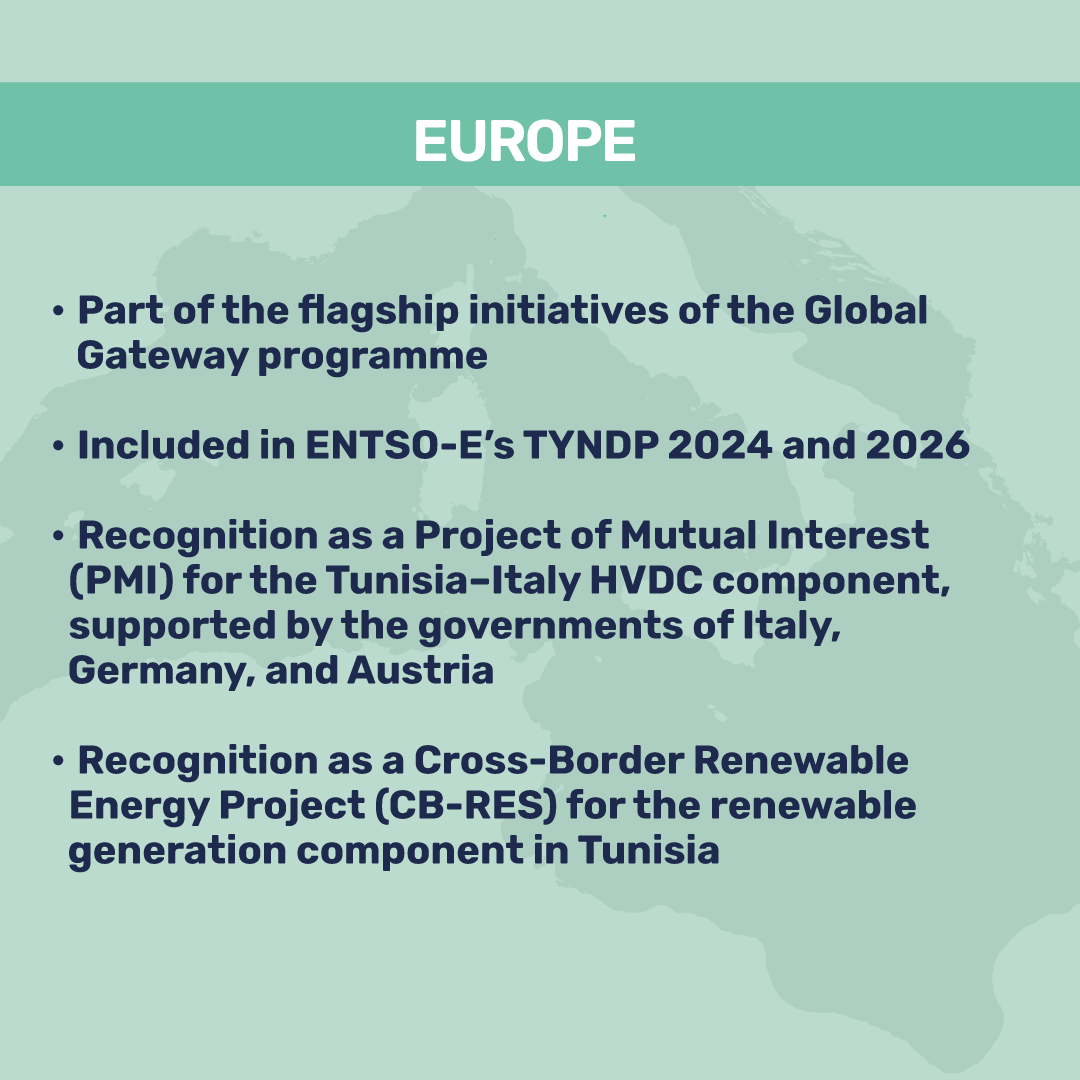
- Parte delle iniziative europee flagship del Global Gateway
- Inclusione nel TYNDP 2024 e 2026 di ENTSO-E
- Riconoscimento dello status di Project of Mutual Interest (PMI) per la componente HVDC Tunisia-Italia con supporto dai governi di Italia, Germania e Austria
- Riconoscimento dello status di CB-RES – Cross-Border Renewable Energy project per il perimetro di generazione rinnovabile in Tunisia
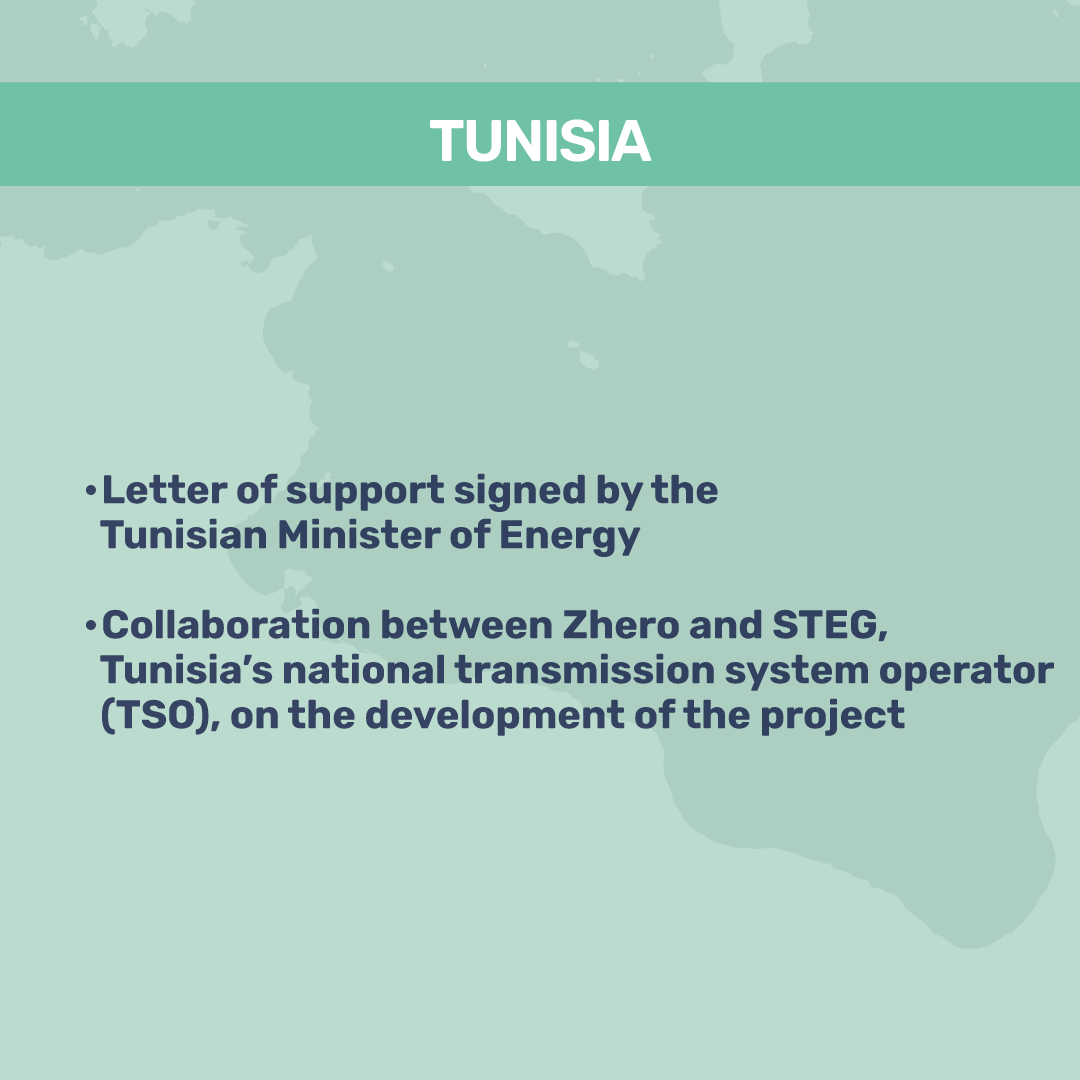
- Lettera di supporto firmata dal Ministro dell’Energia
- Collaborazione tra Zhero e STEG, il TSO nazionale, per lo sviluppo dell’iniziativa
Energy system innovation
The project is is being developed by Zhero, a company engaged in the development and operation of infrastructure for the production, storage, and transmission of renewable energy.
Built on its founders’ more than thirty years of experience in the energy sector, Zhero relies on an international team to develop programmes that include the integration of renewable energy plants with battery energy storage systems (BESS), the production of green molecules, the development of energy interconnections across Europe, Africa, and the Americas, as well as numerous other initiatives.